
It all began when I was parasiting at a friend’s place in Bangalore in 2024. I picked up the TV remote, flumped onto the couch, opened YT, and saw this thumbnail and title.
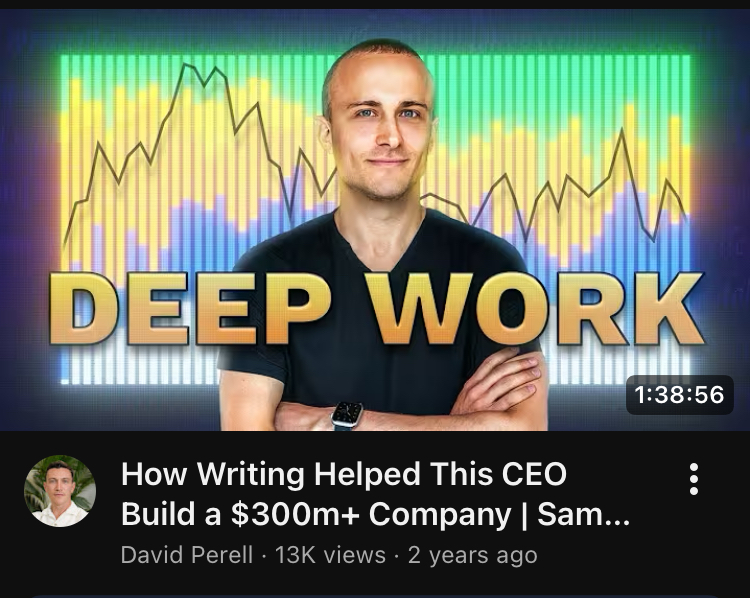
Writing, and building a company? My two favorite topics? Okay, I’m sold on the click. Let’s see what this is about.
I munched through the 1.5+ hour podcast episode in one sitting.
Something about Sam sitting cross-legged in that chair like a monk who’s given up worldly pleasures and talking about Levels’ culture and values enamored me. The highlights: lots and lots and lots of writing, long-ass memos, async-first communication, public townhalls, and “treating people like adults.” After watching the podcast, I read The Generalist’s essay covering the company. It’s paywalled now, but if memory serves me right, it dove deeper into why Levels exists: to solve the metabolic health crisis in the US, how the idea for the product and the company was conceived: after self-experimentation by one of the co-founders and a transformative and soul-searching road trip by another, and the backgrounds (and quirks) of some of the team members.
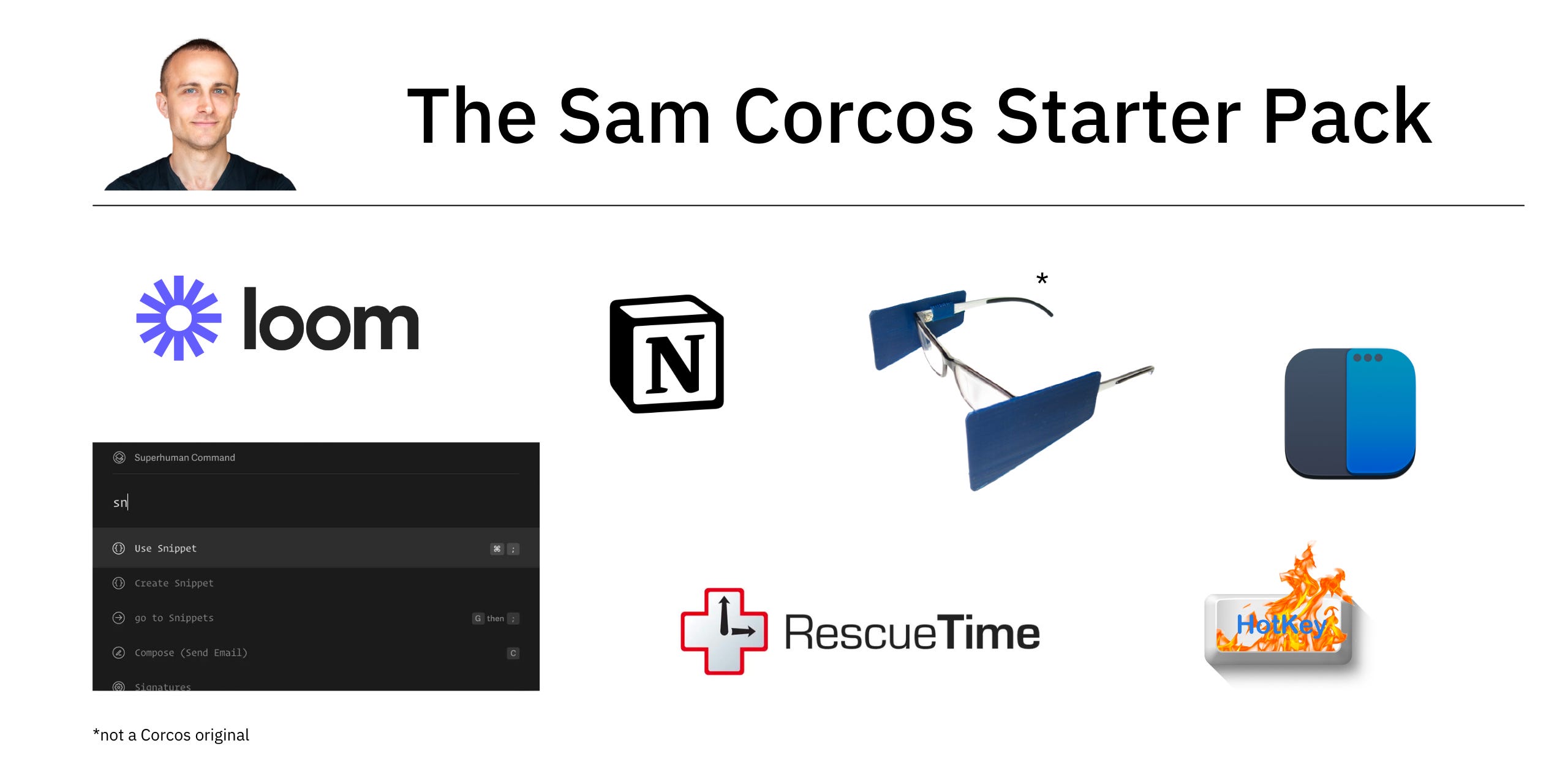 Those are glasses with pads stuck on both sides to force you to stay focused on what’s in front: your work. Yeah. I know.
To some, a company culture like this feels like a total nightmare, but for others, it’s what they’ve been looking for their entire life. Like Sam said, when you create such a culture, the people who want to work with you find you out themselves.
And I did find them out. Levels is the dream workplace for the remote knowledge worker. Sure, many fully-distributed companies are remote-friendly, but this is the crème de la crème. I’ve followed Levels for a couple years now. Quietly cheered them on as they hit milestones, like when they finally bought levels.com and redirected levelshealth.com to it.
But problems arose when I started thinking critically about what they’re selling.
Levels is a unique company not only in how they operate, but also in what they do: They sell a food tracking / nutrition and insights app, and CGMs (Continuous Glucose Monitors), both on subscriptions. A CGM is a wearable device that continuously tracks a user’s blood sugar and sends the data to a smartphone app. It looks like a nicotine patch but it has a small needle (or sensor) that inserts into your skin. One CGM works for around 10 to 14 days, after which it has to be replaced. Until recently, purchasing a CGM required a prescription and its use was limited to within hospitals and on diabetes and pre-diabetes patients. But since a few CGMs have received clearance from the FDA (U.S. Food and Drug Administration Authority) to be sold OTC (over the counter), CGMs have begun to gain popularity amongst “biohackers” and new startups have emerged.
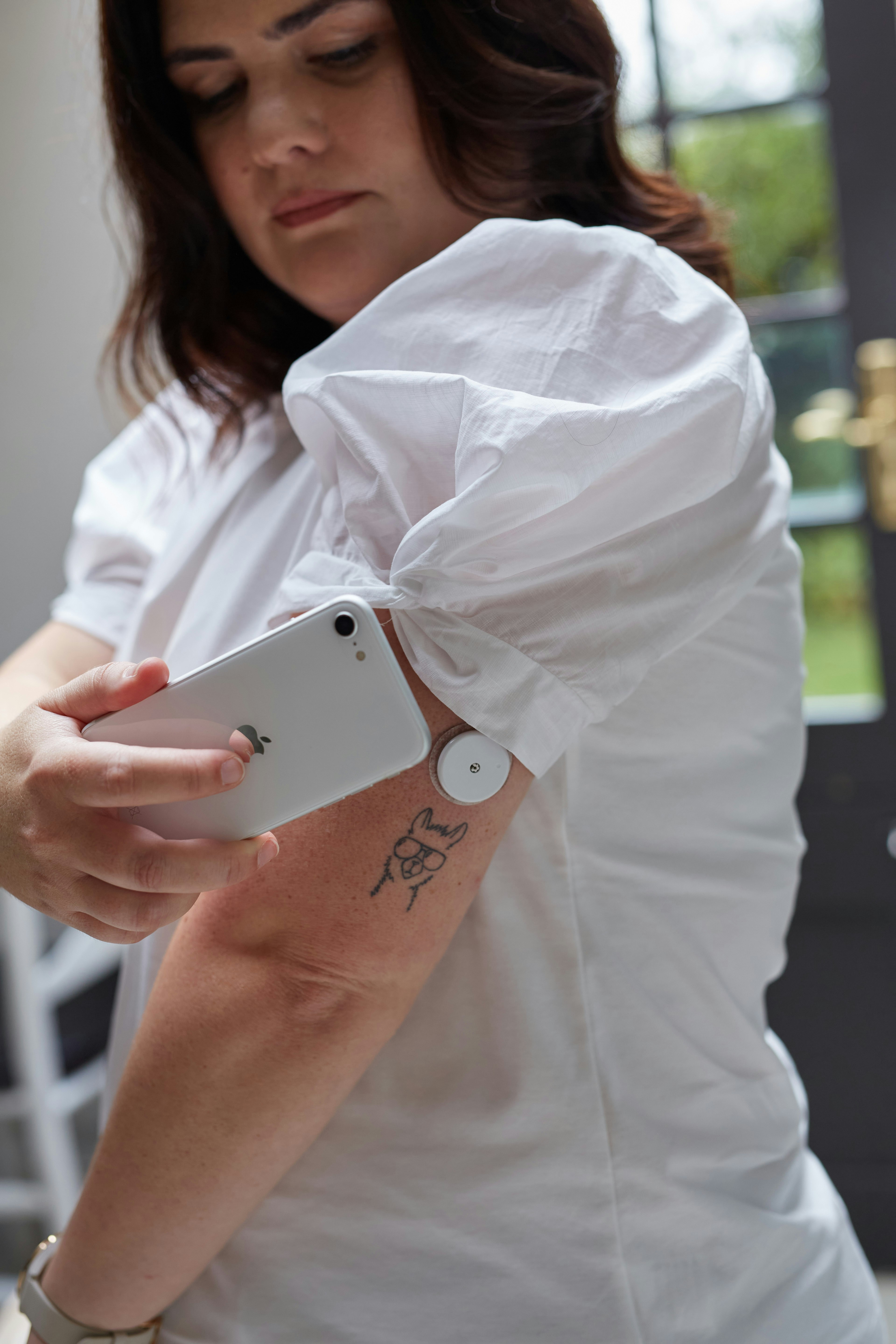 A person wearing a continuous glucose monitor on their upper arm. Photo by Sweet Life on Unsplash.
Levels was the first of this kind of startups. I’m speculating here, but looking at the team they’ve formed, I’m inclined to believe they were a pivotal force in the lobbying that was required to allow CGMs to be sold OTC in the first place.
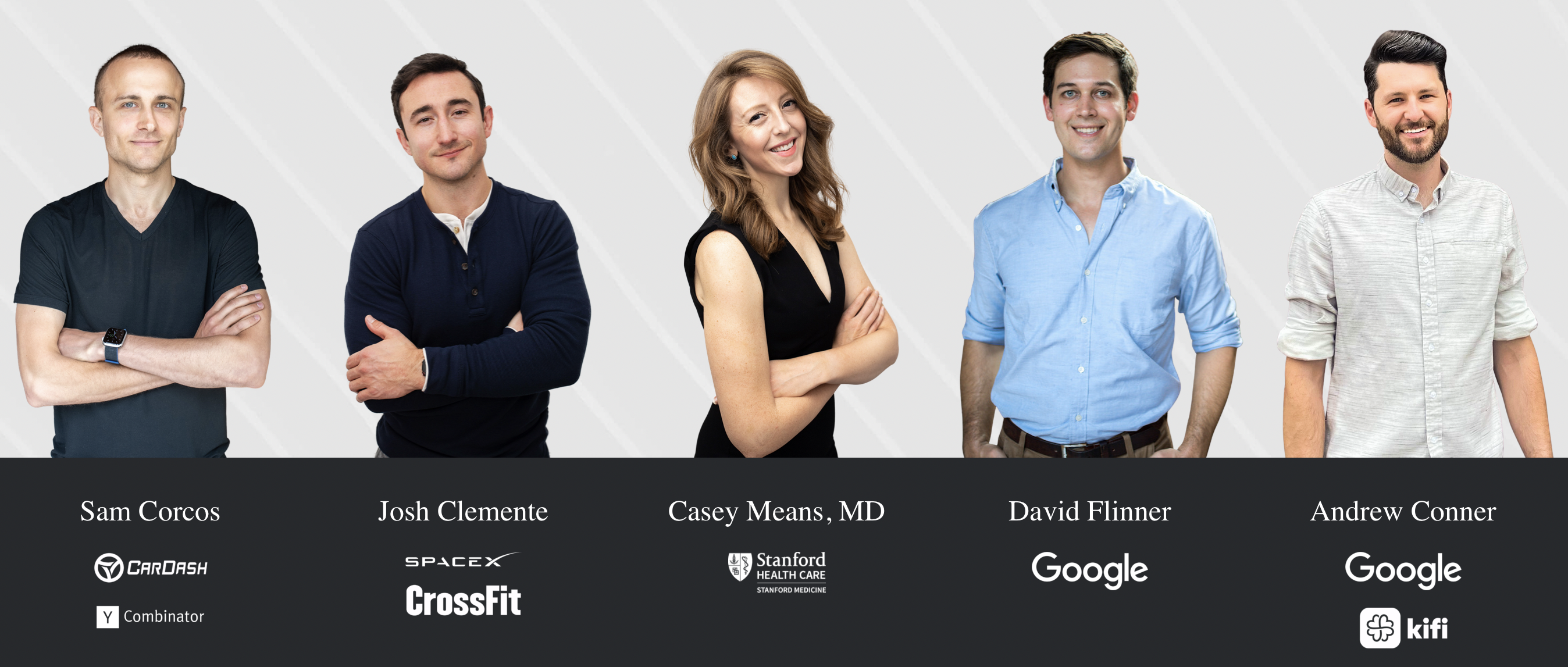 Levels founding team. Image courtesy: Levels careers page
 Levels advisors. Image courtesy: Levels careers page
Levels is not only about the CGM. The CGM is, in fact, a third party device and only a data collection tool. Plus the user has to manually log what they eat, just like for any other food tracker or CGM-based glucose tracking app. But the USP of Levels is in the data interpretation - super talented medical professionals, researchers, and engineers are working together to assign meaning to raw glucose readings and tell users how the food they eat is affecting their bodies and overall metabolic health.
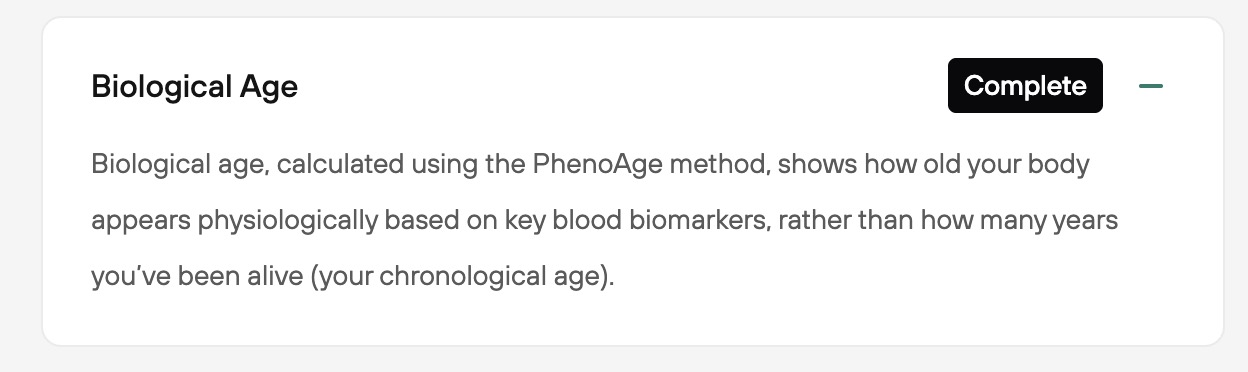
And this is where my problems with what this company is building begin. Levels measures several different biomarkers, and while I generally agree with the saying “what gets measured gets managed,” my question is: do you really need to see all of these measurements to make healthier food choices? You already know what you should and shouldn’t eat. Why would you want metrics bombarded at you day in and day out? Levels has a ‘biological age’ marker. I can’t help but imagine some user out there, looking at their phone screen, hoping they grew just a bit younger today, and worse, actually actively trying to do it. Do you see how sad that is? That’s the risk you run when you implement gamification principles in places where they have no business.
The biohackers have gone overboard, and it’s not just a personal opinion. Doctors and dietitians have warned that for people prone to anxiety or with a history of disordered eating, the real-time feedback loop of a CGM can make things worse instead of better. There’s even a name for having an unhealthy obsession with eating correctly: orthorexia. In the hands of the wrong person, a CGM is basically an accelerant for orthorexia. And a lot of the people wearing them are exactly the wrong person.
When a person truly believes that exercise is important, they go to gym or run or simply do their exercise of choice, because they know that that’s all that matters - the doing; not tracking some measurements from a fitness band. Similarly, when a person truly believes that healthy eating is important, they consciously think about what they’re putting into their mouths every time they eat, and try to eat as less of unprocessed foods as possible. When they do that, they’re already doing what matters. Using a CGM to track info is simply not that important. In fact, the measurements actually take the mental focus away from what actually matters - “watch what you eat,” and puts it on the measuring instead - “watch how what you eat affects you”.
If you’ve decided you want to walk more, and you’ve been more specific about it: you’ve set a target of walking 10,000 steps a day, you can’t realistically count them yourself. So a fitness tracker at least fills a real gap. But when it comes to CGMs, what gap are they filling? That you need to always maintain your insulin below a certain level? I feel like we’ve taken something that’s fundamentally extremely simple and turned it into a measurement problem. The way people maintain metabolic health is by consistently doing the obvious thing - eating less processed food and more unprocessed food.
But that’s not the only problem I have. There’s an even bigger problem to address: I cannot get behind the idea of anyone wanting to have a needle in their arm 24x7. But… But, let’s say for a moment that I can get behind the idea of having a needle in your arm; because I see the marginal value that CGMs can offer to regular people: in helping them build stronger adherence to good habits with the help of feedback loops (for those for whom feedback loops work). Or for helping identify early metabolic issues. But even then, CGM use is justified for only a short while, just enough for you to observe how the food you eat is affecting your body, learn from the data and insights, build better habits that last, and move on. Nobody needs to have a needle in their arm forever - which, in Levels’ defense, is not what they’re saying, but they aren’t denying it either. Look at this landing page. Nowhere do they mention an exit plan, anything that says “learn what you need to and move on.” It feels like they’re selling traditional SaaS that wants you to subscribe and stay subscribed even when you outgrow the use case.
Ultimately, it comes down to two things:
a. Most people don’t want to measure their life everyday. It’s fatiguing. And
b. Even when they (the fitness-crazy, optimization-junkie biohackers: your best customers) do, most of them probably don’t want a needle in their arm 24x7. Nobody needs a needle in their arm 24x7. It’s highly invasive and extremely unnatural.
And it’s that simple. No wonder Levels still hasn’t found product market fit. I recently found out that Sam has even left the company, probably in part because they haven’t found PMF.
All of this being said, I wish the Levels team only the best. They’re genuinely talented people working on a real problem. The metabolic health crisis is real and CGMs can help. I just think the path there looks a lot less like “needle in your arm forever, dashboard for everything” and a lot more like “learn what you need to and leave.” Pivoting to that message just might do the trick…