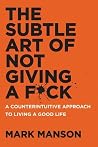
99.999% of issues are skill issues, not talent issues. You have the ability to learn and grow. Read this book to stop self-sabotaging, build the belief that you can do anything you want, and start getting out of your own way.
I have read hundreds of books, but this is the finest writing I have ever read. I can't say anything more out of fear I may not be able to do justice to this masterpiece.
I believe one is missing out on an essential part of the human experience if they, during their time on this planet, don't experience what it's like to be part of another world that doesn't actually exist but feels just as real plus richer than this one. For some people that world is that of The Lord of the Rings, for others it's Star Wars, but for me and countless others, it's Harry Potter. The series is best enjoyed as a child, but if you missed out on it and you're an adult already, you should still give it a shot because so many adults report having felt its magic too. If you have a child, get them the whole set ASAP so they don't miss it. You know, sometimes I think Rowling could have contributed so much to physics, because the power of imagination involved in writing Harry Potter is nothing short of what Einstein must have summoned when theorizing the existence of gravitational waves; but I'm glad she never give a shit about whether light was made up of particles or waves.
Highly opinionated, sometimes enlightening, always warm, and overall fun take on how to run a business. 2-hour read that’s worth the time if you’ve been thinking about values, ethics, morals, and what role they play in how your business should fulfill you.
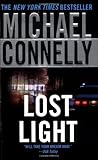
I devoured this one like a starved lion who finds a big, meaty African buffalo after a long, dry spell. Except in reality, it's only been a couple days since his last meal; it's just that the meat is so good that he feels like he was famished for months. I took only seven days to finish this, and I savored every bite of the delicious meat of this African buffalo of a book. It felt like every day of those seven days, when I was reading this book, I was having a perfectly grilled steak from Musso's.
Oh, when will the day come when I will finally visit LA and spend an entire day visiting all of Bosch's favorite places? Even Kate Mantilini, the infamous restaurant from the 1995 film 'Heat'—the best film ever created, never argue on this with me—makes a guest appearance in this book, as Connelly recreates the Pacino-De Niro scene but with Bosch in the diner with his adversary and even directly references the film. Bosch's words: "Did you ever see the movie Heat? This is the place where Pacino the cop meets De Niro the burglar. It's where they both tell each other they won't hesitate to put the other down if it comes to that."
But this book does more than the film and jazz loring and LA touring (there's plenty of that). The plot's good, it resolves well. It is a sensible, fun, and satisfying detective story. My only complaint is that the case comes to a close rather suddenly, but the action at that close is so sit-on-the-edge-of-your-seat page-turning that I'm really nitpicking here.
Bosch's will-do-anything-for-justice character shines through during many instances in the story; it always makes me happy to see that and makes me admire him as a character despite all his shortcomings. The biggest shortcoming being he creates a lot of problems for other people in his personal and professional lives in his quest for justice. Bosch's personal story in the book is touching and comes to a close in a beautifully satisfying emotional catharsis, and it is written just as beautifully; the writing does justice to it.
Although this is only my second Bosch book, the first one being 'The Black Echo'—the very first book in the series—I can see a few differences in the writing style, even though I don't love all of them. While the writing in this book flows smoothly, is accessible yet witty, and describes emotional moments and thoughts effectively and beautifully, I feel the writing style of the first book was more original and had more character throughout. Here, it's like character is thrown in once in a while, while the rest of the time the story is told in a "normal" way. Not to say that's a bad thing, I think that's a stylistic choice and it works well for telling a story like this, although I would love to see what Connelly could do if he went unhinged, like say, Ellroy, to give an extreme example.
Finally, I want to mention that as someone who's a fan of the TV show (Bosch) and liked the spinoff (Bosch: Legacy), imagining Titus Welliver and Sarah Clarke while reading this added to the fun. Although I cannot imagine anyone else playing Bosch right now, I think yet another spinoff featuring a young Bosch showing us his formative years might be possible if executed well; it might appeal to a younger audience. The ending scene made me think of this.
I will end this off-the-top-of-my-head review that I'm writing fresh after I've just finished this book with one suggestion: If you like crime fiction, do yourself a favor and read this book.
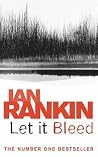
I chose to read Let it Bleed as my next Rebus book because it was recommended by a few people on Reddit as their favorite one in the series. Although I enjoyed the story and the reading journey, I feel my previous two Rebus reads were more enjoyable: Knots and Crosses was fun with its Le Carre-like story and getting really up close and personal into Rebus's personal life, and Set in Darkness was a lot more atmospheric - I could almost feel Edinburgh on my skin. Set in Darkness too had an open-ended ending, but not as open as this one. At least a few of the factors that influence the possible endings here should have been solidified; without that, you can't really speculate the possible endings. I feel Rankin left it way too open-ended. Still, this was an entertaining read, it satisfyingly scratched my perpetual crime-story itch and kept me happy for a good couple of weeks.
4.5/5 ⭐ Absolute page-turner. Un-put-downer. Every minute spent reading was worth it.
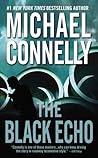
What a debut. Having already watched the show, it was a treat to finally read where it all began. The writing was enjoyable, the plotting was well thought-out, and the broader story was deeply satisfying with just the right amount of suspense, action, drama, twists and turns. Enough information was given. Nothing was held back. As a reader, I did not feel deceived one bit and fully enjoyed the experience. This is what crime fiction should aspire to. Like mutton cooked to perfection in ghee - I wanted to keep eating because it simply melted in the mouth. I might write an expanded review in the future. Right now, I'm just hurrying to grab #2 in the series.
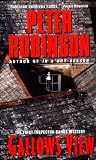
This is, overall, an enjoyable British detective story, but I have two main gripes with this book. The first one is that I couldn't connect with DCI Banks as much as I'd liked to. That is in part because Banks is quite different compared to my favorites - Inspector Rebus (by Ian Rankin) and Inspector Morse (by Colin Dexter). Banks is married with kids while the other two are bachelors (well, Rebus is divorced, and although he has a kid, she doesn't live with him), which fundamentally changes the dynamic of his life, but still, that wasn't the only reason. It's not like I can never connect with married protagonists who don't have abnormal family lives or sexual escapades. I learnt about Banks's taste in operas and bands and biscuits that made things somewhat better, but it simply wasn't enough. The characterization of Banks was simply lacking. I was left wanting more backstory, mannerisms, thoughts... anything that would help me connect with him better
My other gripe is the lack of atmosphere in this book. I'm a sucker for atmosphere. I love how Rankin paints Edinburgh's. I revel in its shitty (subjective) weather. When you couple that with how intimately Rankin has characterized Rebus, I find that I'm living with him, thinking with him, moving with him, feeling and sensing the surroundings with him. Which is why he's my favorite of the lot. In Morse's case, too, although the characterization is slightly lacking, the prose more than make up for it with the dreamy, rainy, foggy, mysterious portrayal of the Oxfordshire. While Robinson has made attempts to describe Eastvale, Yorkshire and "The North" in general, it wasn't enough. I got the feeling as if I was supposed to already know the place or at least have a general idea of it, and as if it was my fault that I did not. Perhaps he did not readers from outside the UK when he wrote the book. I don't know.
Overall, the lack of these two things left me feeling like I was too much of an outside observer; there was an invisible barrier between me and the story that just wouldn't let me be a part of it completely. I expect the books get better, just like for any other detective series; so it's not that I will never pick another DCI Banks novel, but I will not be picking one up anytime soon.
Although I have been critical about this book, and since this is less of a standalone review and more of a comparison of three detective series, I think I may have come across as if I did not like this book. That is not true. As a standalone book, I still recommend this for anyone looking to enjoy a British detective story with a pretty-decent-yet-not-groundbreaking plot. --- Next up, I'm (finally) picking up The Black Echo by Michael Connelly.
Writing was okay. If I’d had a vodka shot every time “he frowned” or “he threw his hands up,” I’d have been dead from liver damage by the time I was halfway into the book. Couldn’t connect with the characters, although attempts were made to characterize them. A few sections rambled too much without adding to the story. The book could’ve been much shorter. Pacing was all over the place, neutral at the start, then slow for a long time, then really picked up after 80%, and that was a lot of fun. Overall, it was an underwhelming experience. It’s sad when a great idea doesn’t live up to its potential. This would work well as a film though - it would be a fucking awesome blockbuster action flick with the right direction and cast. It almost feels as if it was written with that very intention (which would explain why the writing feels so off). Somebody needs to pick up the rights and do it.
Like the first book in the series, this one too takes you on an atmospheric, scenic, and thoroughly delectable journey with its writing but shits itself at the destination.
Gem of a whodunnit set in 90s dark, wet, and very Scottish Scotland.
Reading this book was like playing a TV show in my head. The writing makes you imagine detailed scenes, it’s so cinematic. Is there a word for this kind of writing? I loved how the characters had their own side-quests, how the narrator took me inside the heads of characters with opposing personalities (great writing there), and the atmosphere.
One fine day in the story, the sun’s out, but it’s also cold, windy, and raining at the same time. I was trying to imagine how that would feel like on my skin. Anyone from Scotland here? Is Edinburgh really like this?
⭐️⭐️⭐️⭐️ 4/5 for my first ever Inspector Rebus novel. Looking forward to pick up another one. Bonus points because it reminded me of Bosch (Prime Video) and Heat (Michael Mann).
Still looking for something that can move me as much as this and have found nothing that comes close; except for Lonesome Dove, but even it doesn't get close enough.
As a reader, I feel deceived. Three stars because although the destination was a disappointment, the journey was fun and enjoyable. Overall, do I recommend it? No. Pick another Morse book. [b:The Way Through The Woods|76917|The Way Through The Woods (Inspector Morse, #10)|Colin Dexter|https://i.gr-assets.com/images/S/compressed.photo.goodreads.com/books/1388512043l/76917._SY75_.jpg|813779] is good.